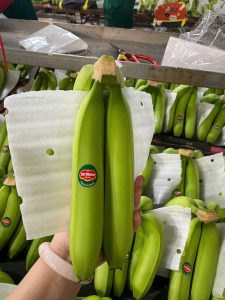
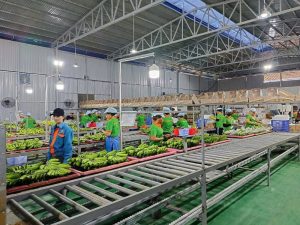
As import markets increasingly tighten their requirements for quality, traceability and sustainability, high-tech agriculture is becoming an important foundation for the export banana industry. Applying technology not only helps raise productivity but also creates quality consistency, optimizes operations and enhances competitiveness in the international market.
From output to the capacity to meet international market demand
According to the Food and Agriculture Organization of the United Nations (FAO), the banana is one of the most widely consumed fruits in the world, with global output exceeding 125 million tonnes per year. However, along with the development of global supply chains, the supplier selection criteria of import markets are changing significantly.
In Japan, South Korea, Singapore and the European Union (EU), products must not only meet food safety standards but also ensure traceability, control of pesticide residues, uniformity between shipments and transparency throughout the entire production process.
This is also why an increasing number of businesses are shifting toward the high-tech agriculture model in order to improve product quality, optimize operations and minimize risks in the supply chain.
With a sustainable development orientation in its export markets, Moc Dinh Duong has chosen to invest in a centrally planned raw-material area, apply technology in production management and progressively refine a quality control system spanning the entire value chain.
How Moc Dinh Duong Builds Its High-Tech Agriculture Model
Managing growing areas through digitalization
One of the biggest changes in modern agriculture is the shift from experience-based management to data-based management.
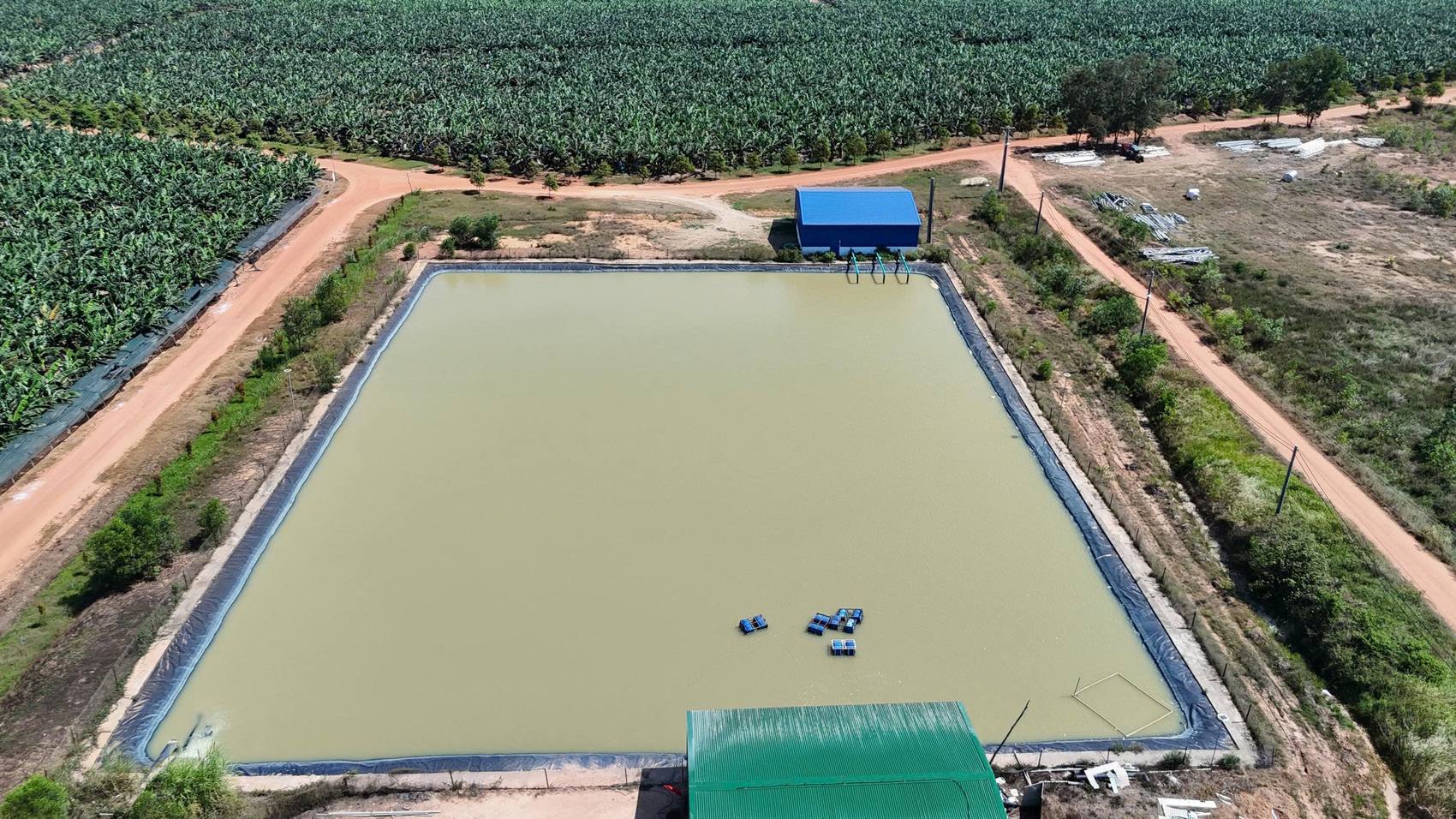
At Moc Dinh Duong, the raw-material area spans a total of 1,000 hectares, of which 500 ha in Xuyen Moc, Ba Ria – Vung Tau are planned by individual production zone to improve quality control and crop-season management.
Data relating to growing areas, cultivation history, crop seasons and the production process is recorded continuously and managed by zone, creating a foundation for traceability and supply forecasting.
Digitalizing data helps the business become more proactive in production management while better meeting transparency requirements from international customers.
Applying modern irrigation and nutrient management systems
According to the World Bank, modern irrigation solutions can help save 30 – 50% of water use compared with traditional irrigation methods, while improving the efficiency of nutrient uptake by plants.
In Moc Dinh Duong’s raw-material area, the drip irrigation system is divided into 5 rotating shifts by garden zone, combined with pumping stations that integrate automatic fertilizer-mixing tanks. This solution allows water and nutrients to be adjusted to suit each growth stage of the plant, rather than watering and fertilizing based on intuition or a fixed schedule.
In addition, supplying nutrients in the right amount and at the right time affects not only yield but also directly determines the sensory quality of the fruit, especially its sweetness, firmness and uniformity among the fruits in a bunch.
This approach not only helps optimize production resources but also contributes to maintaining stable quality and productivity over the long term.
Managing cultivation toward sustainability
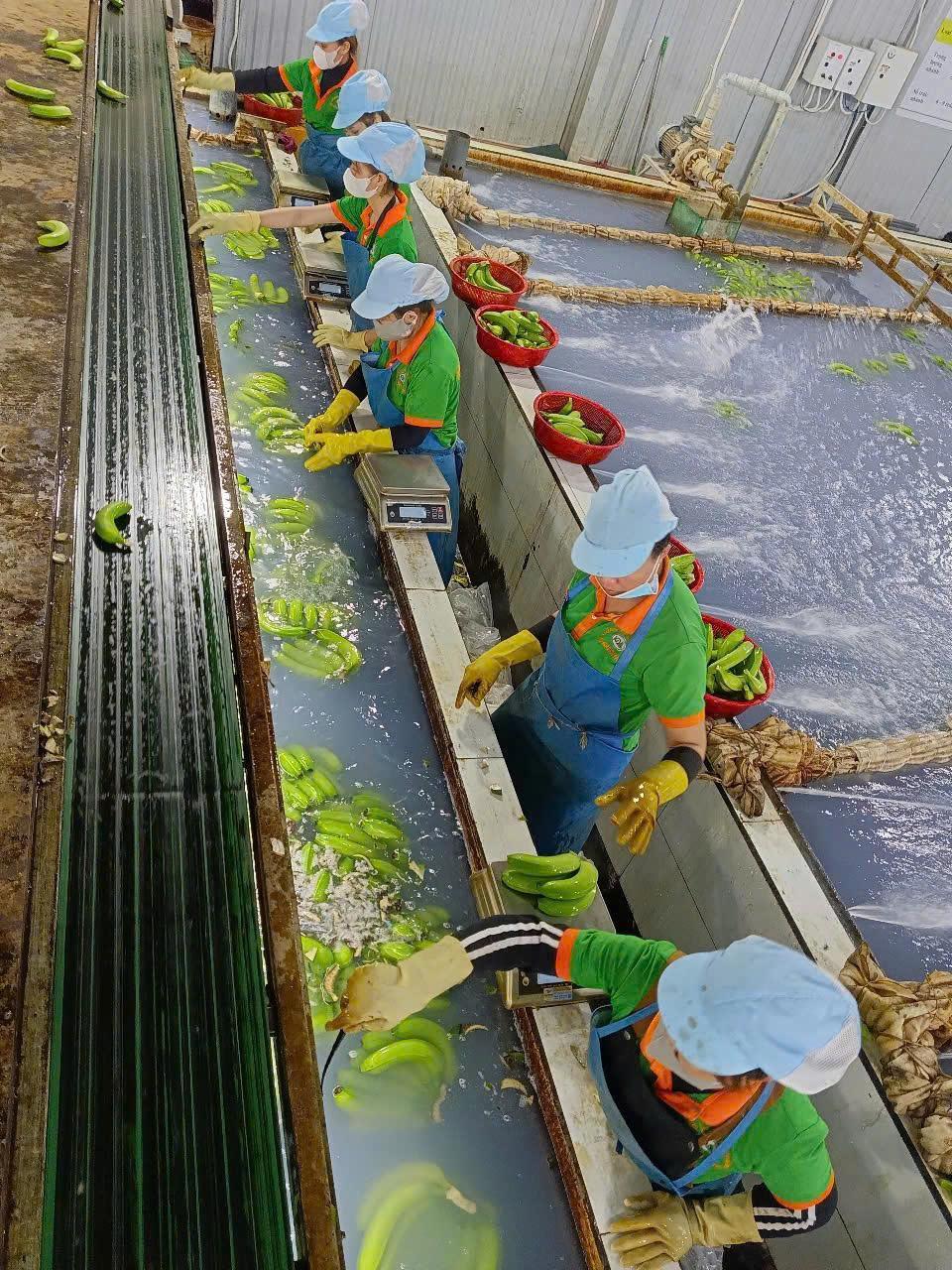
Beyond productivity, sustainability is becoming a criterion of growing interest to import markets. Many international retailers and importers now require businesses to demonstrate effective resource management, reduced environmental impact and the progressive fulfilment of ESG criteria across the supply chain.
At Moc Dinh Duong, solutions such as using PE mulch film to control weeds, optimizing irrigation water and managing nutrients according to the plant’s actual needs are applied to reduce dependence on chemicals and improve resource-use efficiency.
In parallel, by-products from the cultivation process are used to produce organic fertilizer, helping maintain soil fertility and move toward a more sustainable production model.
A production model aimed at year-round stable supply
For importers and retail systems, good quality alone is not enough. The ability to supply stably over the long term is the decisive factor in building lasting cooperation programs.
According to a Rabobank survey of the global fresh fruit industry, supply continuity is one of the top criteria importers prioritize when selecting partners.
With a raw-material area operating on a 3-crop-per-2-year cycle – distributed across multiple production zones and managed through seasonal operating plans, Moc Dinh Duong aims to maintain a stable year-round supply, limit output fluctuations and enhance its ability to fulfil long-term orders.
Refining the production system toward GlobalGAP
GlobalGAP is currently regarded as one of the most widely adopted sets of standards in the export agriculture industry, especially for markets with high requirements for quality and traceability.
According to GlobalGAP statistics, hundreds of thousands of farms in more than 130 countries are applying this system as a foundation for production management and food safety.
At Moc Dinh Duong, the roadmap to complete a management system oriented toward GlobalGAP is being implemented in parallel with the expansion of the raw-material area and the enhancement of quality management capacity, creating a foundation to access high-standard export markets in the future.
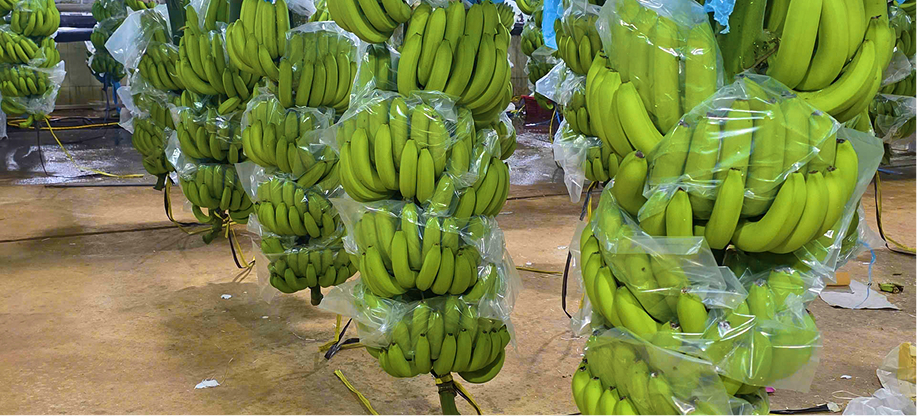
Why Are Importers Increasingly Prioritizing Businesses With a High-Tech Production Foundation?
Reducing quality risk between shipments
For long-term supply programs, what international customers care about is not only the quality of a single shipment but the ability to maintain consistency across many shipments over an extended period. Applying technology in production management helps businesses limit deviations in cultivation, thereby improving product uniformity and reducing risks arising in the supply chain.
Enhancing traceability and information transparency
As requirements for food safety and import management become increasingly stringent, traceability is becoming an important competitive advantage. Businesses with a well-structured data management system can easily provide information relating to growing areas, production processes and shipment records when customers or regulatory authorities request it.
Securing supply for long-term cooperation programs
A stable supply helps importers reduce the risk of supply chain disruption while facilitating the development of long-term business plans. This is also why businesses that own centralized raw-material areas and a synchronized production management system are often prioritized over the fragmented sourcing model.
Meeting the increasingly high standards of the international market
Major import markets are shifting from evaluating the product to evaluating the entire production system behind the product. The more transparent a business is, and the better it controls its production process and traceability, the more opportunities it has to access high-value-added markets.
Conclusion
The export banana industry is entering a new phase of competition, where stable quality, traceability and long-term supply capacity become the factors that determine success.
In this context, high-tech agriculture not only helps businesses optimize production but also creates a sustainable competitive advantage through quality management, information transparency and the ability to meet international standards.
This is also the development direction Moc Dinh Duong is pursuing in order to build a modern, transparent and sustainable agricultural value chain from the growing area to the international market.