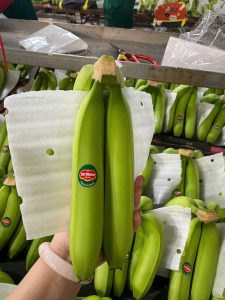
In the banana export industry, product quality is determined not only at the growing region but also depends heavily on post-harvest handling, packaging, and international shipping. A shipment that meets standards at harvest time can still lose commercial value if it is not tightly controlled through the subsequent stages.
Export banana quality is not determined solely at the growing region
According to the Food and Agriculture Organization of the United Nations (FAO), post-harvest losses for fresh fruits and vegetables in many developing countries can range from 20–40% if not managed effectively. For export bananas, these losses not only reduce commercial output but also directly affect sensory quality, shelf life, and the value of the shipment.
Issues such as mechanical bruising, water loss, and premature or uneven ripening often arise during preliminary processing, packaging, and transportation. For this reason, modern export businesses are increasingly focused on investing in post-harvest handling systems, cold logistics, and quality control throughout the supply chain.
The Farm-to-Port model is becoming the new standard of the banana export industry
For many years, agricultural export operations in Vietnam depended significantly on raw materials purchased from many different production areas. This made it difficult to control quality and consistency across shipments.
With the increasingly high standardization trend from importing markets, the Farm-to-Port model is becoming the development direction chosen by many businesses to maintain control across the entire supply chain.
This is also the direction that Moc Dinh Duong is gradually building through a raw material zone with a total area of 1,000 hectares. With a production model controlled from the growing region through to export, the business aims for the ability to synchronously manage the entire product journey, from cultivation, harvesting, and preliminary processing to packaging and international shipping.
The goal is not only to create shipments that meet export standards but also to ensure stability and consistency in long-term cooperation programs.
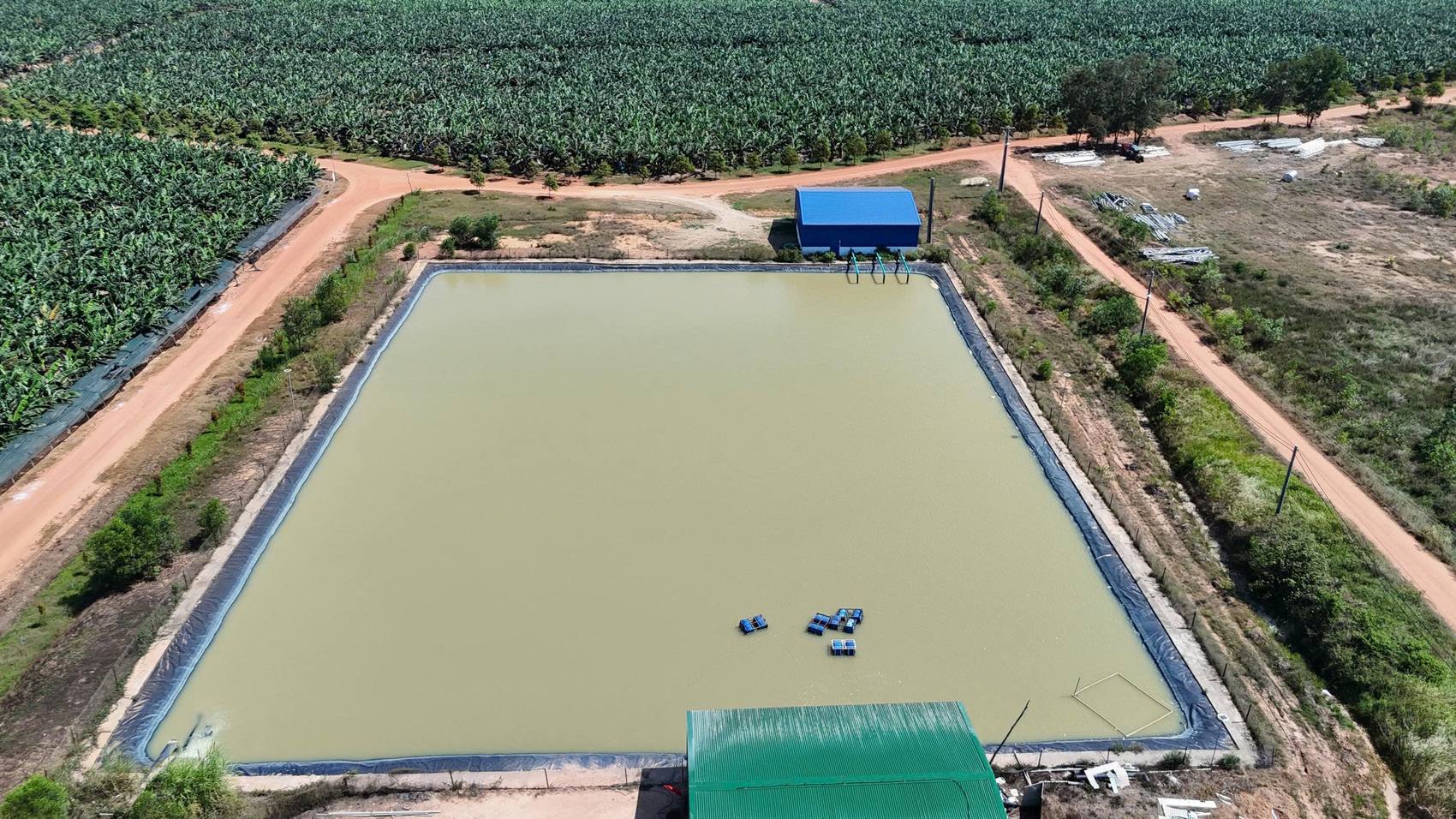
Post-harvest management — The stage that determines the commercial value of a shipment
Harvesting at the right physiological age
Unlike many fruits consumed domestically, export bananas are harvested according to the physiological age suited to the shipping time and the requirements of each market.
If harvested too early, the fruit may not fully develop its flavor and quality when ripe. Conversely, if harvested too late, bananas risk ripening quickly during transportation, reducing shelf life and increasing commercial risk. Accurately determining the harvest time therefore becomes one of the most important factors in the export value chain.
Preliminary processing and sorting
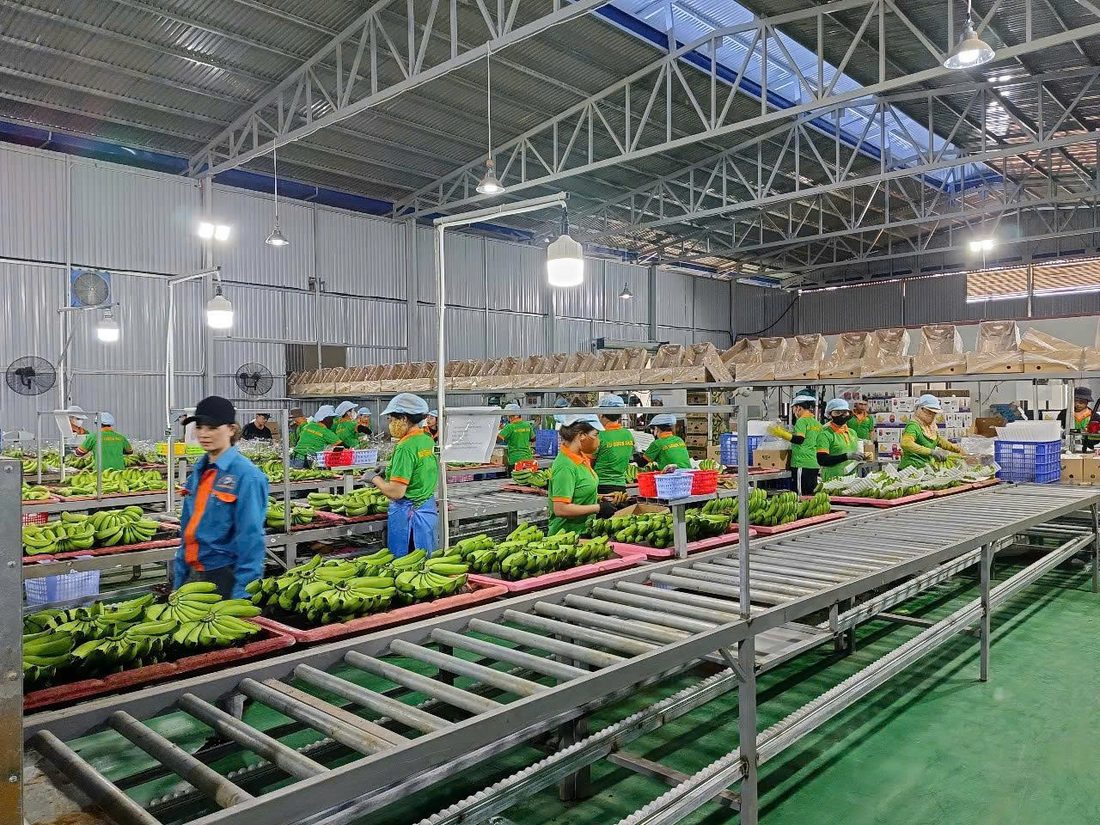
After harvesting, bananas need to be processed in the shortest possible time to limit quality loss. Preliminary processing stages typically include latex sap treatment, product cleaning, sorting, and quality inspection before packaging.
For retail systems and international importers, uniformity among products within the same shipment is an especially important factor. Size, weight, appearance, and sensory quality need to be maintained at a stable level to meet commercial standards.
At Moc Dinh Duong, packing facilities are located right at each farm to shorten the time from harvest to preliminary processing, helping maintain freshness and limit post-harvest losses.
Export packaging
In agricultural export operations, packaging not only serves to protect the product but also plays an important role in maintaining quality throughout the shipping process.
For export bananas, the packaging system must ensure impact resistance, air circulation, reduced water loss, and optimized loading and unloading within the container. At the same time, packaging must also meet the brand identity or Private Label requirements of each customer. For this reason, many export businesses today regard packaging as an inseparable part of their quality control strategy.
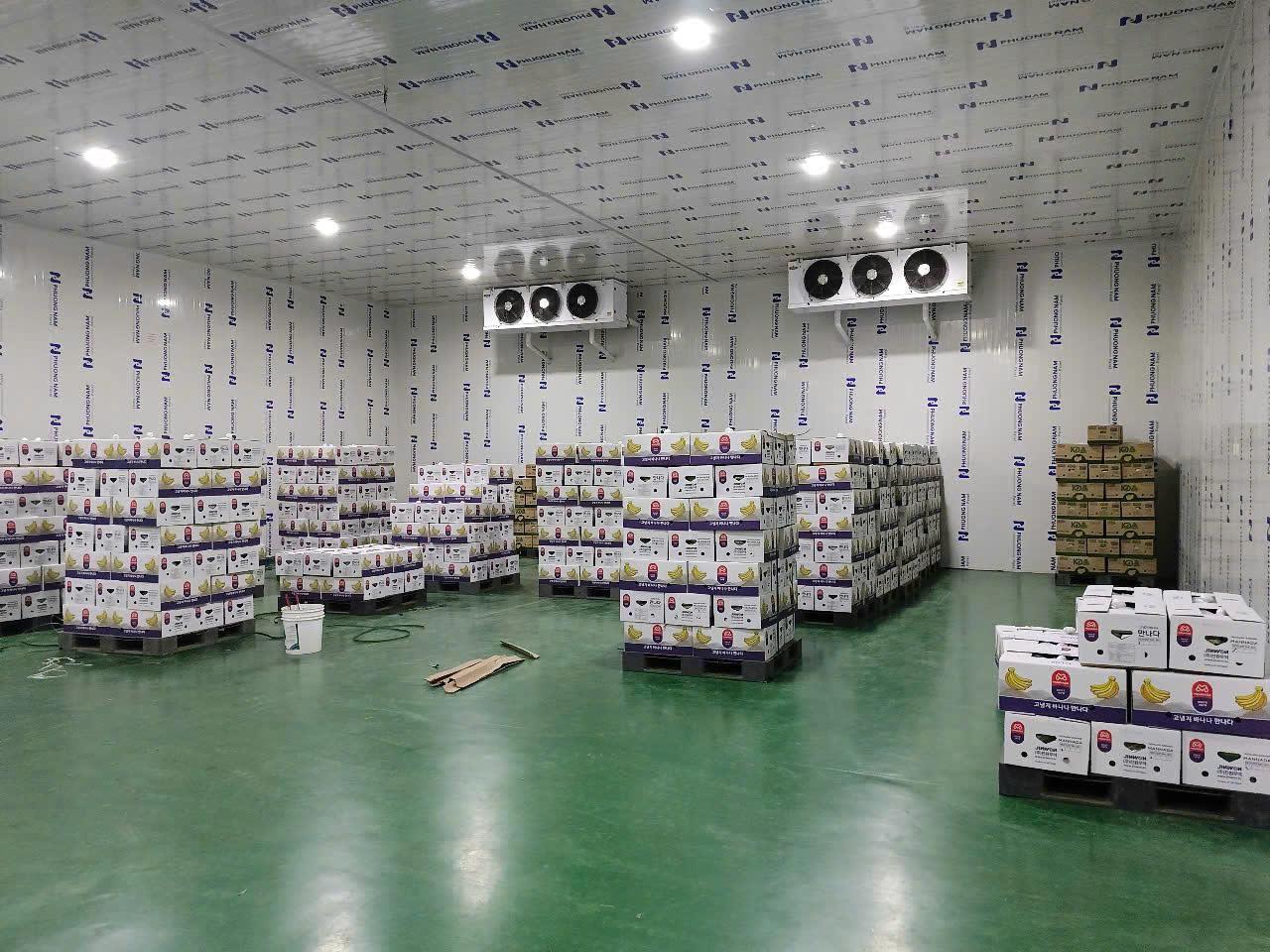
Cold Chain — A key factor in the export banana supply chain
According to cold logistics industry statistics, the shipping time for export bananas from Vietnam to international markets can last from 25–45 days depending on the destination.
During this period, temperature and humidity must be kept stable to maintain the color, firmness, and commercial quality of the product. Even a small deviation during operation can affect the entire shipment. This is why the Cold Chain is considered one of the most important factors determining the success of modern banana export operations.
In parallel with developing the raw material zone, Moc Dinh Duong is also working toward perfecting its logistics capabilities and cold preservation chain to ensure product quality throughout the international shipping process.
Traceability is becoming a mandatory requirement
Importing markets today require not only that products meet quality standards but also clear traceability across the entire supply chain. At Moc Dinh Duong, the production data system is built across multiple layers of information to support traceability and quality control:
- Growing area code: identifies the production area and product origin by each cultivation zone.
- Production log: records the care process, nutrition, and cultivation activities by each stage.
- Shipment records: track harvesting, sorting, packaging, and shipping data for each product batch.
- Quarantine records: manage export documents and import requirements for each target market.
Gradually digitizing production data helps enhance transparency and creates a foundation to meet the increasingly stringent management requirements of international markets.
Why are importers increasingly prioritizing businesses with a closed value chain?
Today, importers are not only looking for quality products but also need a partner capable of stable supply, risk control, and ensuring transparency throughout the entire supply chain.
Businesses that own concentrated raw material zones, a synchronized quality management system, traceability capabilities, and a closed operating chain often have a greater advantage in building long-term cooperative relationships with international customers. This is also the development direction that Moc Dinh Duong is pursuing through the Farm-to-Port model, gradually perfecting its production, logistics, and data management foundation to enhance the competitiveness of Vietnamese agricultural products in the global market.
Conclusion
In banana export operations, product quality is not created at a single stage but is the result of the entire value chain from the growing region to the consumer market.
Effectively controlling the harvesting, preliminary processing, packaging, cold logistics, and traceability stages not only helps reduce post-harvest losses but also creates a sustainable competitive advantage for export businesses. This is also the foundation for building long-term trust with partners in the global agricultural supply chain.